
Search This Supplers Products:Rubber timing beltrubber coated timing beltflat beltribbed beltpoly v beltrubber conveyor belt
Growth and Competition, The Rubber Timing Belt Market Advances Amidst Transformation
time2026/02/04
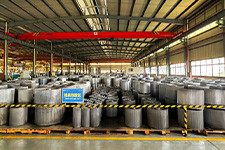
- Steady Global Market Growth Positions China as a Core Battleground for the Rubber Timing Belt Industry
Latest industry analysis indicates that the global synchronous belt market was valued at approximately $2.8 billion in 2024. It is projected to continue growing at a CAGR of over 7%, with the market size expected to surpass $5.1 billion by 2032. The Asia-Pacific region is the fastest-growing market, accounting for about 42% of the global share. Within this region, China alone contributes roughly 20% of the global market share.
Market Driver Analysis:
Driver Key Manifestations Impacted Sectors
Wave of Industrial Automation Continuous increase in global industrial robot installations; surging demand for precision transmission in smart manufacturing. Robotics, Packaging Machinery, High-End CNC Equipment
Steady Demand from Automotive Industry Timing belts are core components of automotive engine timing systems, required for both traditional vehicle fleets and auxiliary systems in new energy vehicles. Automotive Manufacturing & Aftermarket
Industrialization in Emerging Markets Rapid development of manufacturing in countries like China and India drives complete sets of industrial equipment , including conveying and transmission systems. General Industrial Equipment, Infrastructure Development
Competitive Landscape and Challenges:
Dominance by Major Players:
The global market is led by internationally renowned companies such as Gates, ContiTech, and Bando, which hold significant advantages in R&D, branding, and distribution channels.
The global market is led by internationally renowned companies such as Gates, ContiTech, and Bando, which hold significant advantages in R&D, branding, and distribution channels.
Localized Competition: In Asia, particularly in China, a large number of local manufacturers exist. They hold significant positions in the mid-to-low-end market and specific niche segments, leveraging cost advantages and rapid response capabilities. However, they also face pressures from raw material price fluctuations and product homogenization.
Future Challenges: The industry must address long-term challenges including fluctuations in raw material (e.g., rubber) prices, technological competition from alternative transmission methods (e.g., direct-drive motors), and shifts in some traditional demands during the transition to electric vehicles.
Future Trend Outlook:
The future development of rubber timing belts will be deeply aligned with the dual themes of "smart manufacturing" and "sustainable development." Belts integrated with sensors will enable predictive maintenance, while green products using eco-friendly, recyclable materials will gain more favor. For manufacturers, the competitive focus will shift from mere cost control to a contest of comprehensive capabilities such as high-performance material application, provision of customized solutions, and full lifecycle services.
Our Commitment to the Future:
Our Commitment to the Future:
As the global transmission market evolves, maintaining a competitive edge requires more than just cost-efficiency. With deep expertise in demanding sectors like wire and cable production, packaging, and textile machinery, we are positioned to bridge the gap between premium quality and rapid response. We provide high-performance, customized timing belt solutions that rival industry giants, ensuring your operations remain uninterrupted. Contact us today to discuss how our customized transmission solutions can empower your equipment.